

Hagia Sophia
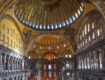
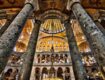
Hagia Sophia: A Monument Rebuilt Through the Ages
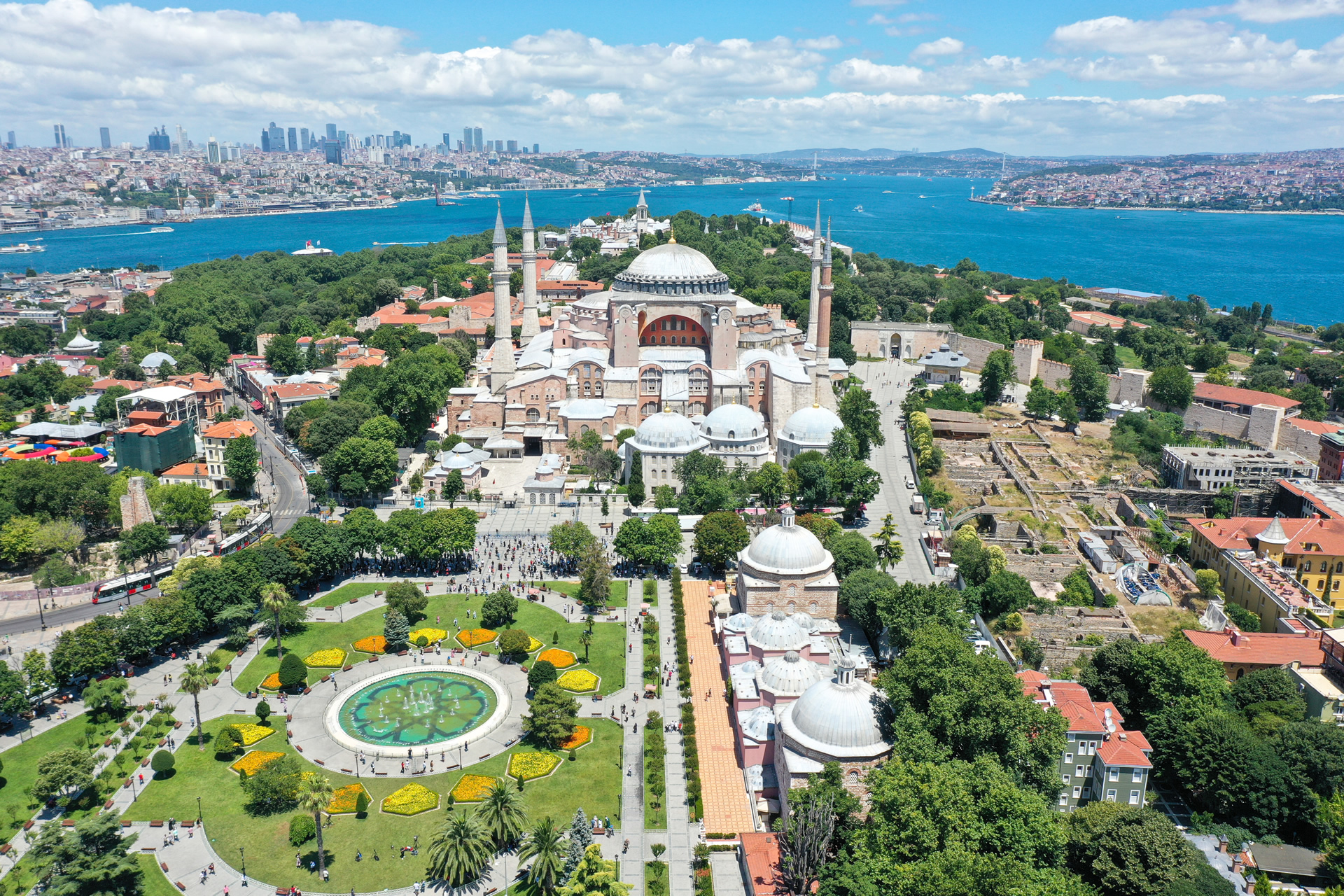
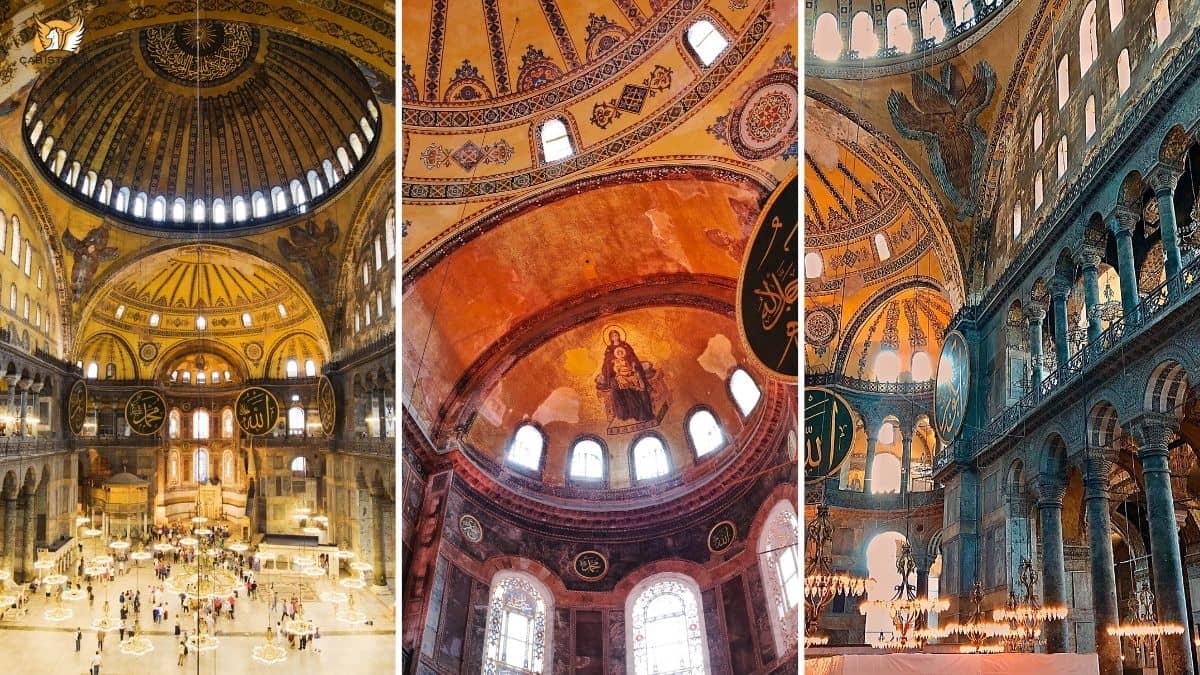
Hagia Sophia, an architectural masterpiece, has been constructed three times on the same site throughout history. The present-day structure is known as the “Third Hagia Sophia.” The initial construction began during the reign of Emperor Constantine I, who officially recognized Christianity as the state religion of the Roman Empire. Built as a wooden-roofed basilica on the first of Istanbul’s seven hills, the structure was referred to as the “Great Church” and was inaugurated in 360 AD during the reign of Emperor Constantius II. This original church was largely destroyed by fire during a revolt in 404 AD, and no remnants of it survive today.
The Second Hagia Sophia was commissioned by Emperor Theodosius II and inaugurated in 415 AD. It was also a wooden-roofed basilica constructed on the same site. However, in 532 AD, it was destroyed during the Nika Revolt against Emperor Justinian. In the aftermath, Emperor Justinian ordered the construction of a much larger and more magnificent church.
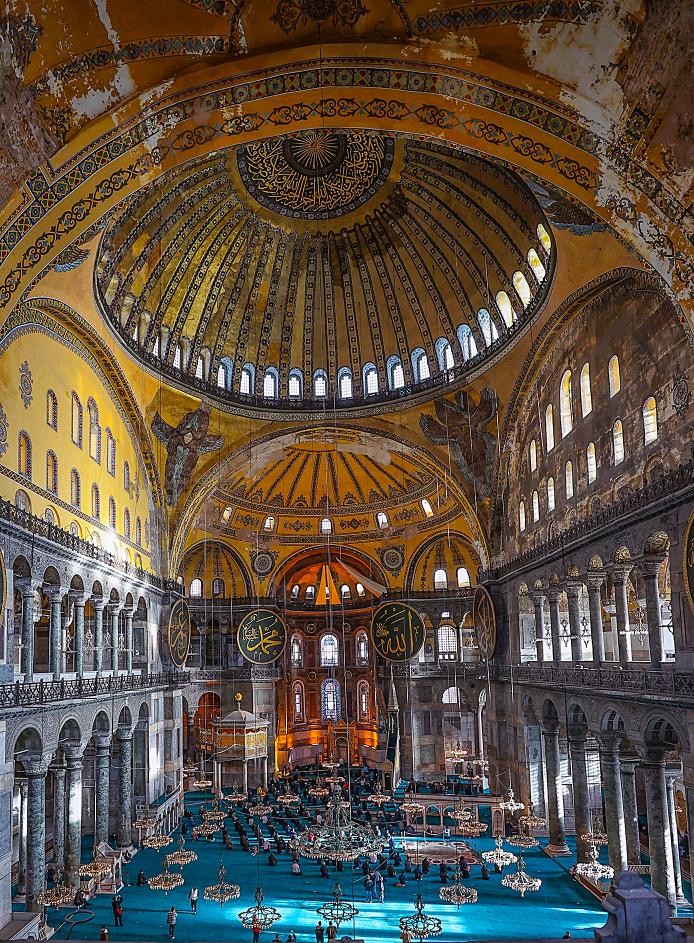
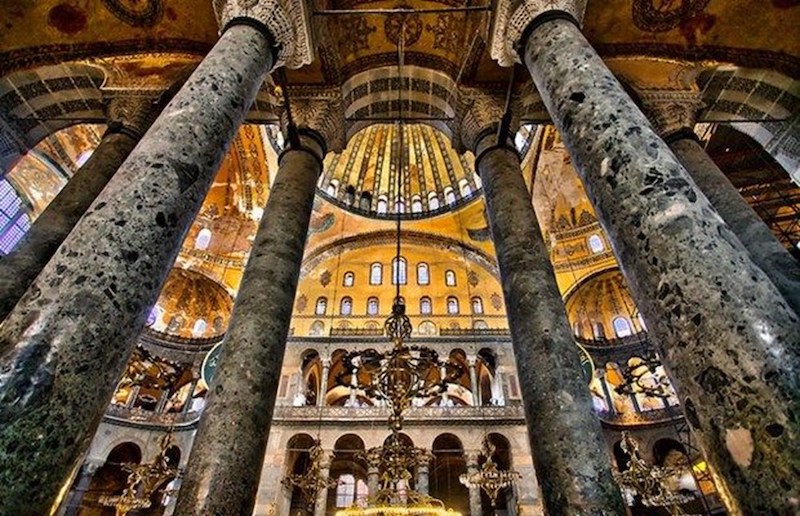
The Third Hagia Sophia, which still stands today, was built between 532 and 537 AD under the direction of Emperor Justinian I. It served as the Imperial Church of the Eastern Roman Empire (Byzantium). Throughout its long history, Hagia Sophia has endured numerous uprisings, wars, and natural disasters.
One of its most severe devastations occurred in 1204 during the Fourth Crusade when the city was invaded and plundered, including Hagia Sophia itself. During the Latin occupation of Constantinople from 1204 to 1261, the building was converted into a Roman Catholic cathedral. After the reestablishment of Byzantine control, Hagia Sophia was repaired, though the restorations were often inadequate. In 1346, part of the eastern arch and the dome collapsed.
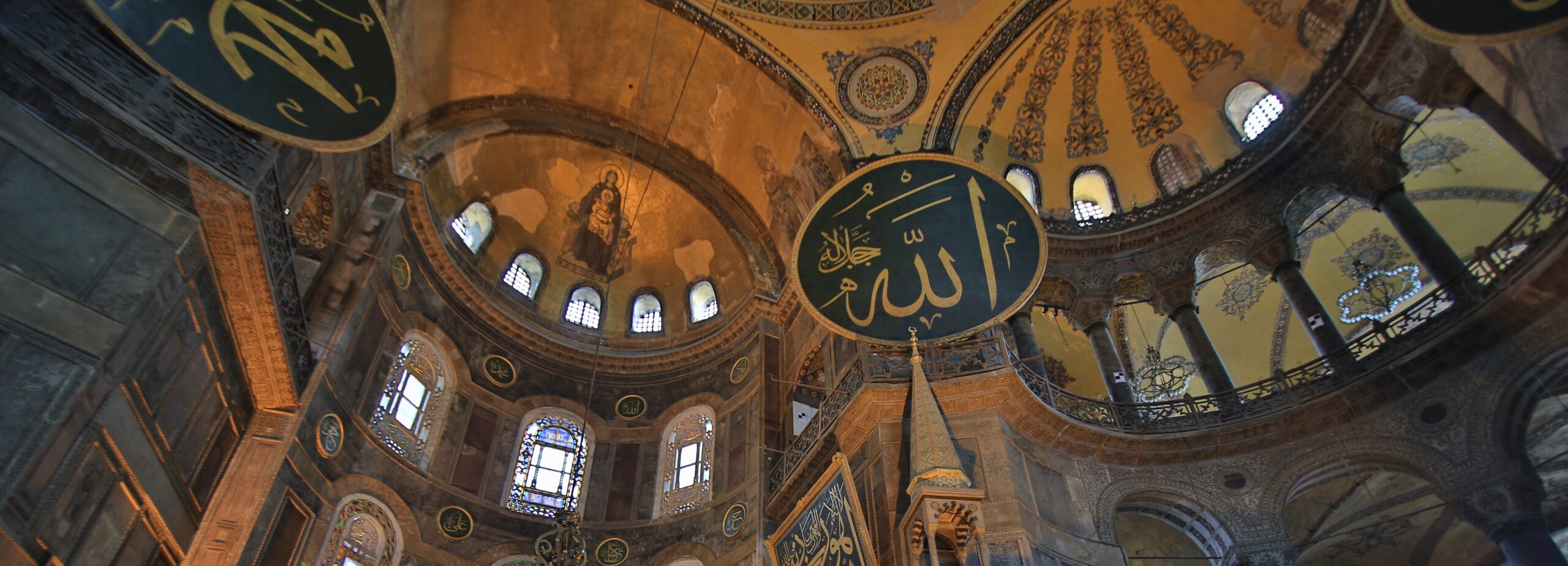
Following the conquest of Constantinople in 1453, the Ottomans considered Hagia Sophia a symbol of victory and accorded it great significance. Fatih Sultan Mehmed (Mehmed the Conqueror) took exceptional care of the structure, initiating continuous maintenance and restoration efforts, thereby enhancing the mosque’s durability. Particularly, the interventions by the renowned architect Mimar Sinan played a crucial role in ensuring the building’s longevity.
Fatih Sultan Mehmed endowed Hagia Sophia as his charitable foundation and allocated numerous revenue-generating properties to fund its upkeep. He also commissioned the construction of a madrasa (Islamic school) adjacent to the mosque to promote education. The first minaret of Hagia Sophia, made of wood, was erected during his reign and was eventually dismantled during a major restoration in 1574. A second minaret, built of brick, was added under Sultan Bayezid II.
Among the Ottoman sultans, Sultan Selim II showed exceptional dedication to Hagia Sophia. When structural fatigue became apparent, he entrusted Mimar Sinan with its repair and reinforcement. While the structure had previously suffered multiple collapses during the Byzantine period, following Sinan’s interventions, Hagia Sophia withstood numerous major earthquakes in Istanbul without further collapse.
The construction of royal mausoleums around Hagia Sophia began with the tomb of Sultan Selim II, designed by Mimar Sinan within the mosque’s courtyard.
Hagia Sophia served as a mosque for 481 years following its conversion after the conquest. In the 1930s, restoration work commenced, and the building was closed to the public. On November 24, 1934, a Council of Ministers’ decree transformed it into a museum. However, on July 10, 2020, Turkey’s Council of State annulled this decree. Subsequently, with Presidential Decree No. 2729 signed by President Recep Tayyip Erdoğan, Hagia Sophia was reopened for worship.
Sultanahmet / Fatih - İstanbulhttps://ayasofyacamii.gov.tr/